
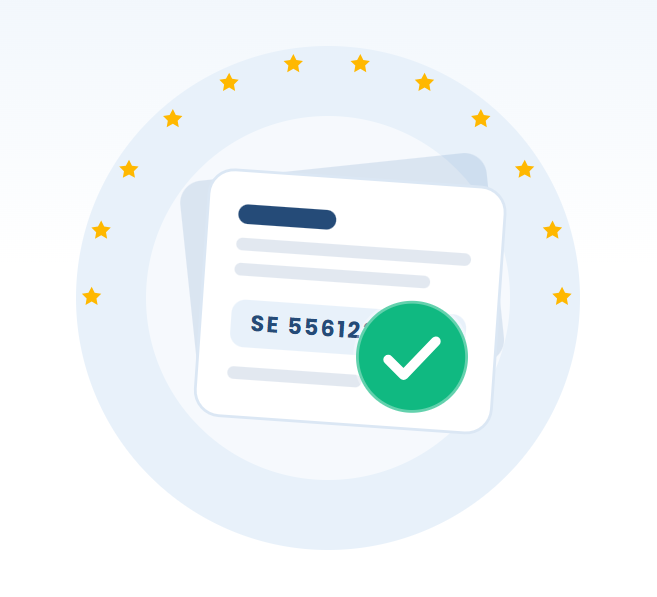

If you sell on Amazon, eBay, Etsy or Shopify and your goods cross a border, sooner or later you will need an EORI number. It is the identifier customs uses to link an import or export declaration to your business. Many online sellers only discover this when a shipment is stuck at the border or a freight forwarder asks for a number they have never heard of. This guide explains exactly when marketplace sales trigger a customs declaration, how EORI works for Amazon FBA, and how to register before your first shipment lands.
When do online sellers actually need an EORI?
You do not need an EORI simply because you sell online. You need one when you are named as the importer or exporter on a customs declaration. For e-commerce sellers, that usually happens in a few common situations:
- Importing FBA stock — sending inventory from China (or anywhere outside the UK/EU) into an Amazon fulfilment centre. You are the importer of record.
- DDP (Delivered Duty Paid) orders — you agree to handle import duty and clearance so the customer receives goods with nothing to pay.
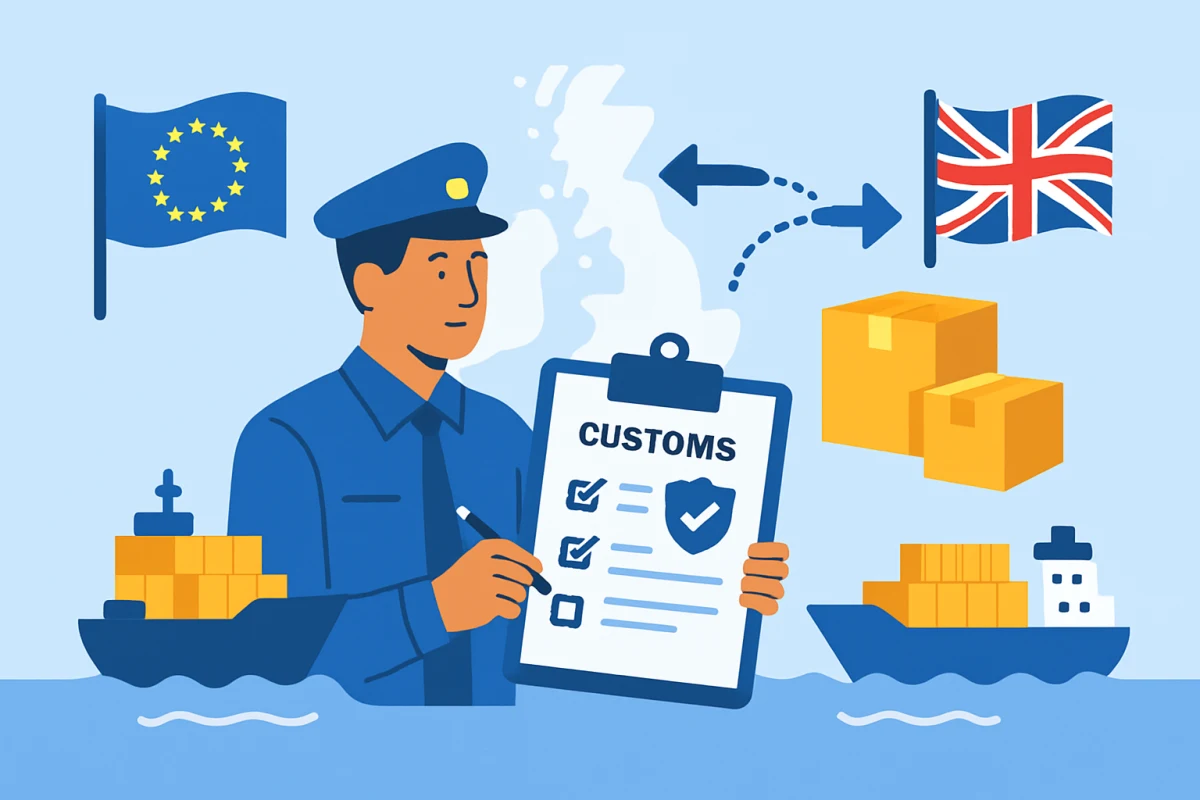
- Shipping across the UK–EU border — sending stock or orders from Great Britain into the EU, or vice versa, after Brexit.
- Bulk cross-border restocking — moving inventory between your own warehouses in different customs territories.
If you only sell domestically, or a marketplace acts as importer, you may not need one at all. But the moment your name goes on the paperwork, the declaration cannot be filed without a valid EORI. You can read more about the basics in what is an EORI number.
What does NOT require an EORI
Small, low-value orders shipped directly to individual EU consumers are usually handled under simplified import rules and, where applicable, IOSS (more on that below). Sales fulfilled entirely within one customs territory — for example, UK stock sold to UK buyers — do not involve a customs declaration and therefore no EORI.
EORI for Amazon FBA sellers
Amazon FBA is where EORI questions come up most, because you are physically importing goods into a fulfilment network. The key point many sellers miss: Amazon is not the importer of record. You are. Amazon will not clear your goods through customs for you.
EU FBA: one EU EORI covers all EU fulfilment centres
The EU is a single customs union. That means one EU EORI number issued by any EU member state works across all EU FBA centres — Germany, France, Italy, Spain, Poland and the rest. You do not need a separate EORI for each country you store stock in. Most sellers register in the country where their goods first enter the EU or where they hold VAT registration.
UK FBA: you need a GB EORI for amazon.co.uk
Since Brexit, the UK is its own customs territory. To import stock into a UK fulfilment centre for amazon.co.uk, you need a GB EORI number (starting with GB). An EU EORI will not work for UK imports, and a GB EORI will not work for EU imports. If you sell on both amazon.co.uk and EU marketplaces, you will need both. See our guide to EORI numbers in the UK for the GB registration process.
| Where you import stock | EORI you need | Covers |
|---|---|---|
| UK fulfilment centres (amazon.co.uk) | GB EORI | All UK imports |
| Any EU fulfilment centre | One EU EORI | All EU member states |
| Both UK and EU | GB EORI + EU EORI | Separate customs territories |
| Northern Ireland movements | XI EORI (in addition to GB) | NI-specific rules |
If you move goods to or from Northern Ireland, you may also need an XI EORI number alongside your GB one.
eBay, Etsy and Shopify: the dropshipping pitfalls
Sellers on eBay, Etsy and Shopify often think they are exempt because they do not hold stock. That depends entirely on who is named on the customs declaration.
Dropshipping from outside the UK/EU
If you dropship products directly from a supplier in China to a UK or EU customer, the crucial question is who is the importer. If you promise the customer no extra charges (effectively DDP), you or your logistics partner become responsible for clearance — and that needs an EORI. If the parcel arrives and the customer is asked to pay import VAT and a handling fee, that is a common source of bad reviews and returns.
Shopify sellers shipping cross-border in bulk
Shopify sellers who hold their own stock and ship internationally in bulk — for example, sending a pallet of inventory to a 3PL warehouse in another customs territory — will need an EORI for those movements, exactly like an FBA seller.
Etsy makers selling to the EU
A UK-based Etsy maker shipping finished goods to EU buyers is exporting. Individual low-value parcels are usually handled under simplified rules, but if you ship commercial quantities or use DDP terms, expect to need a GB EORI for the export side.
IOSS vs EORI: they are not the same thing
This causes endless confusion. IOSS (Import One-Stop Shop) is a VAT scheme; EORI is a customs identifier. They solve different problems and are not interchangeable.
| EORI | IOSS | |
|---|---|---|
| Purpose | Identifies you on customs declarations | Collects import VAT at point of sale |
| Applies to | All customs declarations (any value) | Low-value B2C goods sold to EU consumers (up to €150) |
| Type | Customs registration | VAT registration/reporting scheme |
| Who uses it | Anyone importing/exporting commercially | Online sellers of low-value goods to EU buyers |
In short: IOSS makes small parcels to EU consumers smoother by charging VAT at checkout, so buyers are not surprised by delivery-time charges. EORI is what lets any commercial shipment clear customs in the first place. Many sellers who import FBA stock and also ship low-value orders will use both — an EORI for the bulk import and IOSS for the retail sales.
Checklist before your first FBA shipment
Do not book freight until you can tick every box below. Missing an EORI is one of the most common reasons stock gets held at the border.
- Register the correct EORI(s). GB for UK imports, an EU EORI for EU imports. Apply early — see how to get an EORI number.
- Confirm your EORI is active. Use our EORI number checker to validate it before you hand it to a forwarder.
- Sort your VAT registration. Importing goods usually requires VAT registration in the destination country; check whether you also need IOSS for retail sales.
- Classify your products. Have accurate commodity (HS) codes ready — these determine duty rates.
- Prepare commercial documents. Commercial invoice, packing list, and correct declared values.
- Confirm Incoterms with your supplier. Know whether you are buying FOB, EXW, DDP, etc. — this decides who handles clearance.
- Appoint a customs broker or freight forwarder. They file the declaration on your behalf using your EORI.
How to give your EORI to a freight forwarder
Once you have registered, your forwarder or customs broker needs your EORI in full so they can complete the import declaration. Provide it clearly, exactly as issued:
- Send the complete number — including the country prefix (e.g.
GBfollowed by your VAT number and a suffix, or an EU number with the member-state prefix). - State which shipment it applies to — GB EORI for UK-bound stock, EU EORI for EU-bound stock. Sending the wrong one causes rejections.
- Include your VAT and any deferment account details if you use postponed VAT accounting or a duty deferment account.
- Double-check the format before sending. If you are unsure of the exact structure, our checker confirms whether the number is valid and recognised.
A good forwarder will ask for these details up front. If they do not, prompt them — a declaration filed without your EORI, or with a mistyped one, is the difference between stock arriving on time and sitting in a bonded warehouse racking up storage fees.
Common mistakes that delay marketplace shipments
- Assuming Amazon clears your goods. It does not; you are the importer.
- Using an EU EORI for UK imports (or vice versa). They are separate systems.
- Confusing IOSS with EORI. You often need both, for different reasons.
- Registering too late. Applications can take time; do it well before goods ship.
- Handing over an unverified number. Always validate first.
Your next step
If you are about to send your first FBA shipment or start shipping cross-border on eBay, Etsy or Shopify, get your EORI in place now — before you book freight. Start with how to get an EORI number to apply, and once you have it, run it through our EORI checker so you can hand a verified number to your freight forwarder with confidence.
Comments (0)
No comments yet. Be the first to share your thoughts!
Leave a comment
Your comment will appear after it's reviewed. Your email is never shown publicly.